Read across. The left column is what the seventeenth-century lists and the Barnstable record support. The right column is what the 1933–35 manuscripts claim. A sentence never belongs in both.
In the record
In the legend · 1933–35 manuscripts
Record Who he was
Augustin Bearce, age 20, on the passenger list of the Confidence of London, 200 tons, under a Lord Treasurer’s warrant of 11 April 1638. Compilers date the sailing from Southampton on 24 April. The residence column is blank. Southampton is the port, not a proved birthplace.1
Legend Who he was
A full-blood Romany, of a family whose name was really Be Arce, deported because he was a Gypsy, and sent on as a criminal. None of that is in the passenger list. Augustine is an ordinary English Christian name. Austin is the short form the town used.8
Record His wife
He had a wife by the time children were born. She was admitted to the Barnstable church on 7 August 1650, and the entry does not name her. Later compilers often supply Mary and leave the surname blank. That given name is not the 1650 line.3
Legend His wife
Mary Little Dove Hyanno, or Hyano, born about 1625, daughter of John Hyanno, a Mattachee sagamore, and granddaughter of the sachem Iyannough. Married in the summer of 1639 at the Mattachee village, by Indian rites, not by the English minister.7
Record The church and the town
He came to Barnstable with the first company, 1639, in the compiled account. Austin Berce, as the church book is transcribed, joined on 29 April 1643, the first name on the list of those who joined after the move from Scituate. Proposed freeman 3 June 1652. Admitted 3 May 1653. Grand juror in 1653 and 1662. Surveyor of highways in 1674. The records call him Goodman.4
Legend The church and the town
The manuscripts have him joining the Puritan church in 1650 for the protection it gave, the same year as his wife, and they have Plymouth unwilling to marry a Gypsy to anyone. The church date in the record is 1643, not 1650, and a Goodman who sat on the grand jury was not being hidden as a transported prisoner.
Record The land
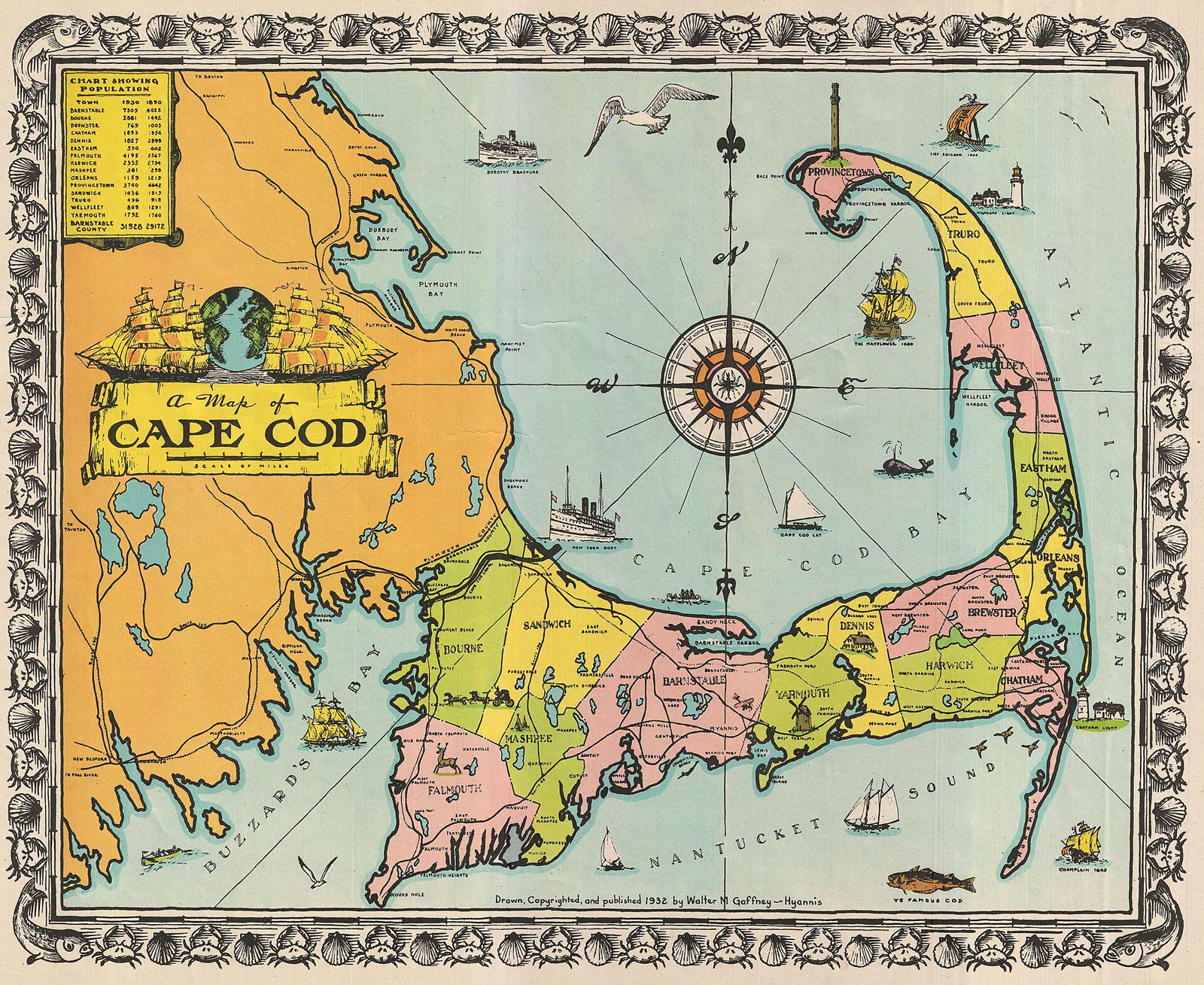
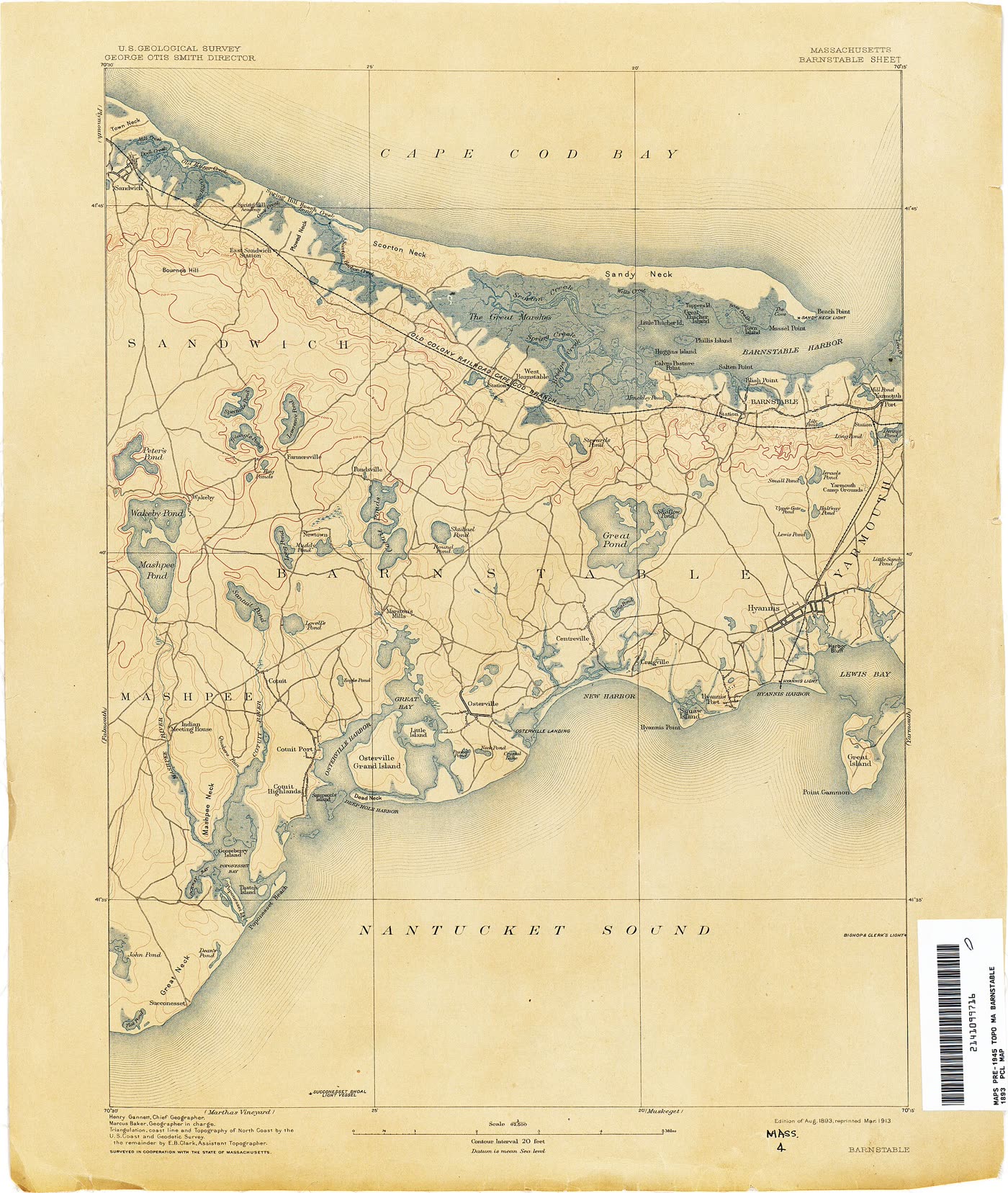
A twelve-acre rocky houselot in the westerly part of the East Parish, bounded by John Crocker, the meadow, Isaac Robinson, and the woods; meadow; two thatch islands called Bearse’s Islands; acres in the Calves Pasture and at Shoal Pond; thirty acres at the Indian Pond lot by the Herring River. A road from the house toward Hyannis came to be called Bearse’s Way. These are town-grant descriptions in the compiled genealogy, not a sachem’s verbal gift.5
Legend The land
Old Highyannough gave the couple some of the best land in Barnstable, by word, and the family held it for three generations without a deed. The sachem of the 1621 English visit was long dead by 1639, if the usual account of his death is right. A missing deed is not the same as a gift.9
Record How we know
A shipping list, a church book, freeman and jury entries, and the Barnstable land descriptions copied by Otis and by Newcomb. No marriage record, no death record, and no settlement of his estate have been found. He is still in the town’s life in the 1670s. Compiled dates of death range from the mid-1680s to before 1697.6
Legend How we know
Two manuscripts Franklyn Ele-watum Bearce placed with the Library of Congress, 1933 and 1935. They say a diary of Zerviah Newcomb Bearse, called A True Chronicle of the Bearse Family, written from personal knowledge, proves the Indian wife. No agency Jacobus asked had that diary, or a copy of it.8
Spellings in the records move: Bearse, Bearce, Bearss, Berce; Austin, Augustin, Augustine. This page uses Bearse and Augustine except when it is quoting a list. Hyannis is the town’s name. Hyanno and Hyano belong to the legend.